Guides & Resources
Texas HB 6 Gives Teachers More Power to Remove Students. What Parents Can Still Challenge.
By Staff · July 23, 2026
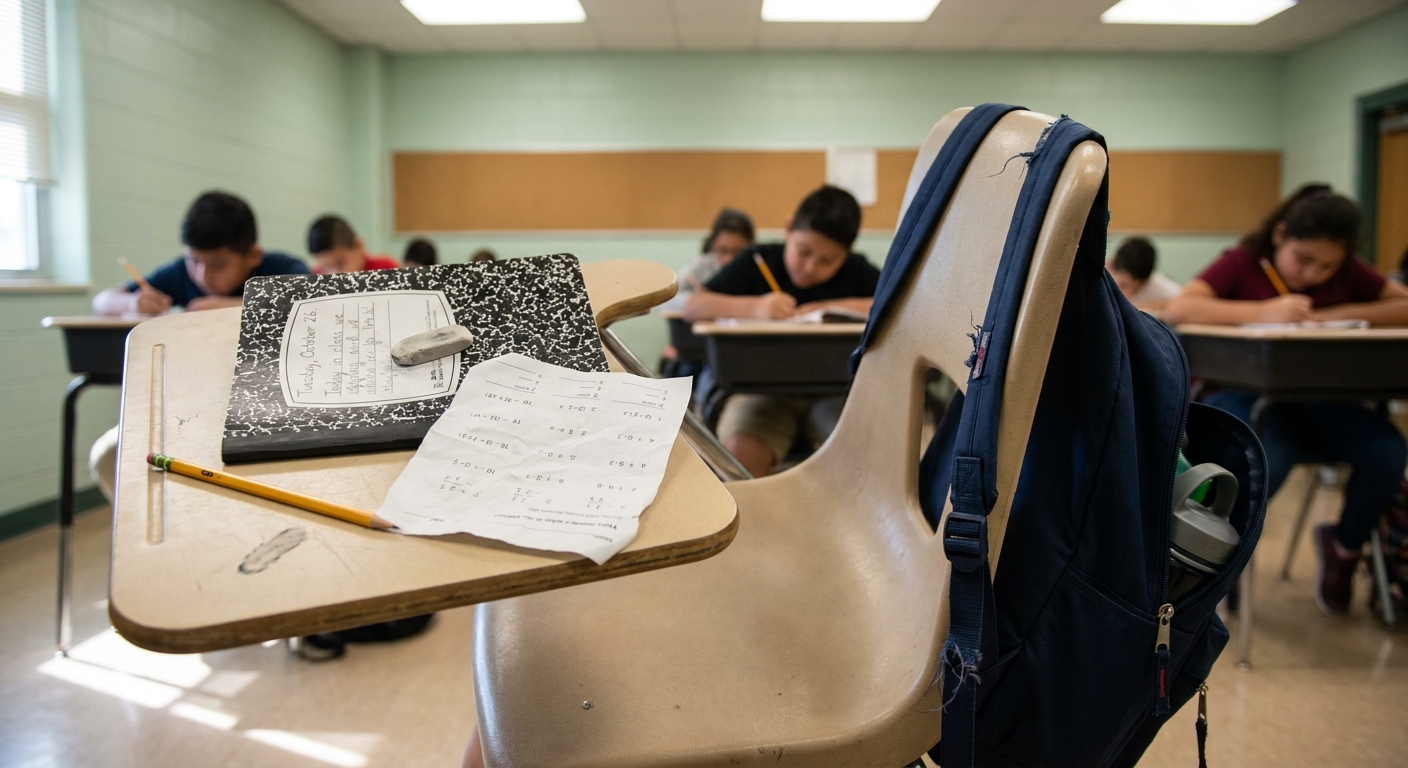
In Texas classrooms this school year, one incident a teacher judges "unruly" or disruptive can now remove a student from regular instruction. That removal can lead to an open-ended stay in in-school suspension or, for some expelled students without a juvenile justice placement, education entirely online. For parents—especially those whose children need disability services, behavioral support, or consistent in-person instruction—the question is no longer just whether a child can be disciplined, but how quickly that discipline can cut off access to a classroom.
Texas HB 6, signed into law on June 20, 2025, took effect at the start of the 2025–26 school year and is now being implemented across Texas districts. The law expanded teachers' authority to remove a student from class for a single incident of unruly, disruptive, abusive, or bullying behavior, lowering the previous standard that required repeated interference with classroom instruction. It eliminated caps on in-school suspension, allowing schools to keep a student in ISS indefinitely with a review every 10 school days, while out-of-school suspension remains limited to three school days. And it created a virtual expulsion program that can keep expelled students learning from home rather than in a school building when no juvenile justice alternative placement is available for their grade level.
A single incident can now lead to removal
Before HB 6, a teacher could remove a student only for behavior that repeatedly interfered with the teacher's ability to communicate or with other students' learning. Now a teacher can remove a student for a single incident the teacher judges to be unruly, disruptive, abusive, or bullying, giving broader discretion and a lower bar for removal.
The removal and return process
When a teacher removes a student, the district must notify the parent and hold a conference within three school days; the teacher must be given an opportunity to participate. At the conference, the administrator must notify the student and parent of the right to appeal.
A removed student may appeal to the campus placement review committee or, if district policy allows, the campus threat assessment and safe and supportive school team. The student may not return to the teacher's class unless the teacher gives written consent or a return-to-class plan has been prepared. The Texas Education Agency adopted a model return-to-class plan for cases where the teacher does not consent.
In practice, the teacher's initial judgment that behavior was disruptive is difficult for a parent to challenge, and the requirement for teacher consent or a formal plan before return means a single incident can lead to long-term exclusion from that class.
Virtual expulsion keeps students out of school buildings
The virtual expulsion program places expelled students in virtual instruction when no juvenile justice alternative education program placement is available for the student's grade level. Students must receive virtual instruction and materials, and the district must ensure the student has computer equipment and internet access, providing them if the family does not. The program is designed to follow, to the extent possible, the same standards and requirements as a disciplinary alternative education program.
A student's virtual expulsion placement must be reviewed at least every 45 school days to determine whether the virtual setting is still appropriate and whether an in-person placement has become available. Unlike traditional expulsion followed by placement in an alternative campus, virtual expulsion keeps the child out of any school building indefinitely, removing access to in-person teacher support, peer interaction, counseling services, and specialized accommodations that cannot be replicated online.
For students who depend on in-person supports such as speech therapy, occupational therapy, or behavioral interventions, virtual expulsion poses acute risks to educational progress and well-being.
Disability protections remain—but one Texas safeguard is gone
HB 6 does not repeal federal protections under the Individuals with Disabilities Education Act or Section 504. Students placed in in-school suspension are entitled to continue receiving the services specified in their IEP.
But HB 6 repealed a Texas Education Code provision that previously required an ARD committee meeting before disciplining certain students with disabilities for bullying, harassment, or making a terroristic threat. Students with disabilities can now be disciplined for those offenses without the ARD team first considering whether the behavior was a manifestation of the child's disability or whether the IEP should be revised.
Disability Rights Texas has noted that while federal protections remain on the books, the expanded teacher removal authority and unlimited in-school suspension create new practical challenges for enforcing those protections in real time. Parents of students with disabilities should document every removal, request written explanations of how IEP services will continue during ISS or virtual expulsion, and insist on manifestation determination reviews when discipline may be related to the child's disability.
Broader discretion brings a familiar equity risk
Texas school discipline data show that Black students are more than twice as likely as White students to receive out-of-school suspensions and that they made up 46% of K–2 out-of-school suspensions while representing only 12% of the K–2 population. A University of Houston policy brief found that 83% of Black male students and 74% of Hispanic male students faced removal from the classroom at least once for discretionary violations, compared with 59% of White males. The same policy brief found that 63% of students facing disciplinary action were economically disadvantaged, compared with 47% of the overall student cohort.
Texas data show students with disabilities are overrepresented in school arrests, tickets and complaints, and use-of-force incidents. Research indicates discipline disparities are especially strong for discretionary violations where educators have room to decide whether and how to punish.
HB 6 expands exactly that kind of discretionary authority—categories like "unruly" and "disruptive" leave significant room for subjective interpretation and implicit bias. For parents of Black children, Latino children, children with disabilities, and children from low-income families, the expansion raises urgent questions about whether their child will face harsher or more frequent discipline for the same behavior that peers exhibit without consequence.
Local policy will determine the protections families see
Implementation is continuing into the 2026–27 school year, and exact policies vary by district because each must adopt its own Code of Conduct and local procedures for removal appeals, placement review committees, and ISS review processes. Districts must review a student's in-school suspension placement at least every 10 school days, but the substance of that review—who participates, what criteria are used, whether parents are notified or invited—is determined locally. The Texas Education Agency issued guidance including a model return-to-class plan, but districts retain discretion over many operational details.
Parents cannot assume their district's practices mirror another district's; each family needs to ask their own school administration how removal appeals work, who conducts the 10-day ISS reviews, what the virtual expulsion eligibility and review process looks like, and how the district documents and communicates these decisions.
What parents can do now
If your child is removed from class, request written documentation of the specific behavior that triggered the removal—date, time, and teacher's statement—and attend the required conference within three school days. At the conference, confirm in writing that the administrator notified you of your right to appeal to the campus placement review committee or threat assessment team, and ask for the district's written appeal procedures and deadlines. If the teacher refuses to consent to your child's return, request a copy of the return-to-class plan and ask what specific benchmarks or conditions your child must meet.
If your child is placed in in-school suspension, ask the district how often the placement will be reviewed, who will conduct the review, what the criteria are, and whether you will be notified of each review and its outcome.
For students with an IEP or 504 plan, demand that the district provide in writing how your child will continue to receive all services during in-school suspension or virtual expulsion, and request a manifestation determination review if the behavior that led to discipline may be related to your child's disability. If your child is assigned to virtual expulsion, request the written placement order, ask when the first 45-day review will occur, and document any loss of educational or therapeutic services that cannot be delivered virtually.
Keep a log of every disciplinary action, every communication with school staff, and any observed pattern—for example, whether your child is disciplined more frequently or more harshly than peers for similar behavior. Contact Disability Rights Texas or other advocacy organizations if you believe your child's rights under IDEA, Section 504, or the Texas Education Code are being violated, or if you need help navigating the removal appeal or ISS review process.
Ask your district to share its full Code of Conduct, its HB 6 implementation policies, and any data it collects on removal rates, ISS duration, and virtual expulsion placements, broken down by student demographics, so you and other parents can assess whether the law is being applied equitably.