Get Involved
Texas and California Education Boards Tackle Major Policy Agendas This Month — Here's How to Weigh In
By Staff · June 28, 2026
As June 2026 unfolds, the two largest education systems in the United States are simultaneously convening on consequential policy decisions that will shape classrooms for years to come. California enrolls approximately 6.2 million K-12 students; Texas enrolls over 5.6 million. The Texas State Board of Education held a weeklong regular meeting from June 22–26, 2026, in Austin, covering instruction, school finance, and school initiatives, with decisions that will take effect in the 2030–31 school year. The California Senate Education Committee convened multiple bill hearings throughout June on sessions held June 3, 10, 17, and 24, meeting every Wednesday at 9:00 a.m. in Sacramento.
Because publishers often prioritize curriculum alignment with these two states' standards, textbooks adopted in either can reach hundreds of thousands of students nationwide. The decisions made in these June meetings—on curriculum content, instructional materials, student protections, and education funding—will reverberate far beyond state borders, making this month a critical window for civic engagement.
What Happens When People Show Up—and When They Don't
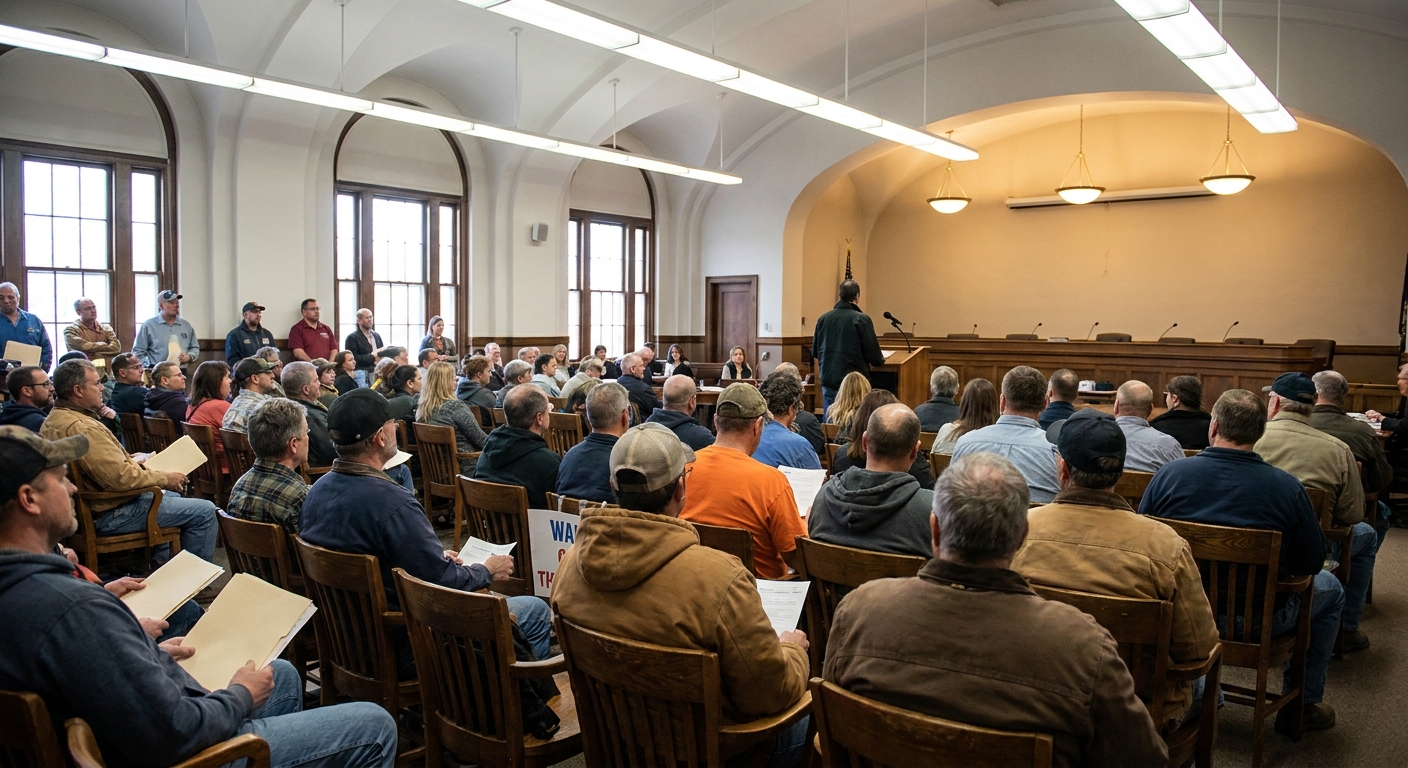
Nearly 500 parents, teachers, students, and community members signed up to testify at the Texas State Board of Education's June 2026 hearing on a proposed Bible curriculum, leading to contentious exchanges that lasted a full week. Despite this unprecedented turnout and passionate testimony warning of constitutional concerns, the board voted 9–5–1 along party lines to approve a Bible-infused reading list requiring more than 5 million public school students to study specific passages such as the Eight Beatitudes and 1 Corinthians 13 as part of mandatory reading.
"The curriculum's heavy reliance on particular biblical texts and translations privileges evangelical Christianity and raises serious church-state concerns," advocates testified.
The outcome reveals a critical truth: showing up is necessary but not sufficient when organized ideological factions have already secured board majorities—but it creates a public record, shifts long-term accountability, and prevents boards from claiming unanimous community support for controversial policies.
"Elected officials respond to community numbers and need to hear diverse voices to shape effective education policies. Showing up, standing up, and speaking up prevents the board from assuming that opponents of certain educational approaches are the only voices in the community," education advocates note.
The 500 who testified created a record. Imagine what happens when the other side draws 50 and you draw zero.
What Texas Tackled—and What You Can Still Do
The Committee on Instruction agenda addressed new curriculum mandates requiring specific Bible passages in grades 7–12, proposed K–12 Social Studies TEKS, and instructional materials review for IMRA Cycle 2026. The Committee on School Finance/Permanent School Fund addressed school finance policy and Permanent School Fund operations, including potential funding implications of new curriculum mandates. Nearly 400,000 K–12 teachers work in Texas public schools and will be directly affected by these decisions.
Public testimony registration for the June 22–26 meeting closed on June 19, 2026, and the public comment period on proposed K–12 Social Studies TEKS ended June 15. However, public review of instructional materials submitted for IMRA Cycle 2026 continues through July 31, 2026.
For matters not subject to statutory rulemaking, the SBOE uses an Informal Public Comment Process where comments are submitted via email to SBOEsupport@sboe.texas.gov, with each comment period posted for a minimum of 7 days. The public comment period for SBOE rules lasts at least 31 days and continues through the next regular meeting where the board takes a second reading, with testimony provided at the podium. Speakers are limited to two minutes and must indicate whether they are for, against, or commenting on an agenda item when registering.
The new Bible curriculum and social studies standards will be phased in for the 2030–31 school year, meaning multiple future SBOE meetings will address implementation, materials adoption, and refinements—creating ongoing participation opportunities. Educators and parents can track upcoming agenda items, comment deadlines, and meeting schedules through the official Texas State Board of Education website.
California's Sweeping June Agenda and How to Participate
The California Senate Education Committee addressed 31 bills during its June 24, 2026, hearing alone, covering topics including protection of minors from addictive social media feeds, regulation of short-term workforce training programs, and guardrails against risky financial practices in education.
AB 302 by Bauer-Kahan prohibits schools from excluding students from extracurricular activities including sports and clubs due to non-use of addictive feeds, described as the logical next step after phone bans to prevent schools from becoming a funnel into platforms harming children. AB 1534 by Irwin establishes enhanced guardrails for short-term workforce training programs of 8–15 weeks to ensure they meet federal Pell Grant standards, limits tuition to the maximum Pell award, and prohibits risky income-share agreements or high-interest loans.
Written position letters must be submitted by 12:00 noon on the Friday prior to the scheduled hearing, on letterhead with a signature, title, and organization name, and must clearly state support or opposition. Letters can be submitted online through the Advocacy Portal after registering for a username and password, or by email or mail to the committee. In-person testimony is limited to two minutes per witness, with witnesses forming a line at the mic near the railing and clearly stating their name, organization, and position on the bill.
While most June 2026 hearings have concluded, bills that advance from committee will face floor votes and future legislative sessions, and the committee website provides ongoing hearing schedules and bill tracking.
Why Your Voice Counts—Even When Boards Hold Majorities
Public participation in school board meetings fosters transparency, accountability, and stronger community relations, upholding open governance principles even when boards hold majority positions.
"Public comment is a critical opportunity for the board to learn what issues matter to the community and for individuals to make their voices heard on district policies," policy experts note.
School boards typically do not respond substantively during public comment to avoid violating open-meeting laws, but they listen intently and may address issues later through follow-up or future agenda items.
Montgomery County Public Schools revised policies to strengthen responses to antisemitism and hate after community listening sessions and engagement with 12 community organizations, forming a Hate Bias Advisory Group, and retrained all 1,600 principals on the discipline code following public input—demonstrating that sustained engagement produces institutional change. New York City's Panel for Educational Policy must conduct a 45-day public review process before approving school closures and must provide an explanation if it approves a proposal that the community council voted against, illustrating how participation rights become embedded in governance structures.
"Teachers are urged to play a valuable role in shaping district vision and priorities by contributing their expertise and experience to school board proceedings. There is power in numbers when advocating for students and families," educators emphasize.
Even when immediate votes follow partisan lines, public testimony creates an official record that shapes future board elections, legal challenges, implementation decisions, and community accountability.
The Cost of Silence
When education boards face controversial policy changes and hear overwhelming testimony from one organized faction with little counter-testimony, they can credibly claim community consensus even when silent majorities disagree.
Democratic members of the Texas State Board of Education sought to pause a major social studies curriculum overhaul after learning that an adviser's university department received funding from a conservative think tank, but the board moved forward after extensive public testimony from Texans worried about the pace and process was insufficient to shift the outcome. The board approved a statewide K–8 reading list requiring Bible stories such as Adam and Eve, the Beatitudes, and the Parable of the Prodigal Son, alongside a major rewrite of social studies standards that deemphasizes racial, geographic, and cultural diversity and focuses more on Texas and U.S. history.
Even board member Evelyn Brooks, a Republican who expressed comfort with an optional Bible literature course, opposed the broader required works list on grounds of teacher autonomy and curricular balance, demonstrating that organized advocacy can push boards beyond even sympathetic members' comfort zones when opposing voices are absent.
"Limited, clear moral teachings like 'treat your neighbor as yourself' are acceptable in the curriculum," Brooks said.
Public comment periods are structured as limited public forums with time limits and speaker selection policies, meaning that when defenders of pluralistic education don't show up, organized factions dominate the record without contradiction. The absence of diverse testimony allows boards to characterize controversial decisions as representing "parent" or "community" will—a claim that becomes harder to sustain when hundreds of educators, parents, students, and advocates create a public record of opposition.
Your Field Guide to Effective Testimony
The Texas Council of Teachers of English Language Arts urged educators to submit written public comments and sign up to testify before the SBOE on an updated literary works list, emphasizing that these testimonies will affect teaching, learning, materials, and assessment for nearly 400,000 K–12 teachers statewide.
Open with clarity. State your name, organization or role (teacher, parent, student), and your position on the agenda item or bill from the first sentence.
Lead with student impact. The most compelling testimony describes how the policy will affect real children in real classrooms rather than abstract principles or political arguments.
Ground your testimony in evidence. Cite research, professional standards, implementation challenges from other districts, or your own classroom experience, avoiding jargon while demonstrating expertise.
Appeal to shared values such as student success, teacher autonomy, fiscal responsibility, or community input rather than partisan framing, making it harder for boards to dismiss your testimony as ideological.
Use written comments strategically. Position letters allow for more detailed arguments than two-minute oral testimony, remain part of the official record, and can be submitted even when you cannot attend in person. Submit both oral testimony and written backup materials that include supporting evidence and specific policy language recommendations, giving board members resources to reference in future deliberations.
Coordinate broadly. Work with professional organizations, parent groups, and advocacy networks to ensure diverse voices testify across different time slots, avoid repetition, and demonstrate breadth of concern beyond any single faction.
Stay engaged. Track upcoming agenda items, comment deadlines, and hearing schedules through official SBOE and California Senate Education Committee websites, signing up for email alerts and calendar reminders. Even if registration deadlines have passed for specific June hearings, ongoing comment periods, future board meetings, implementation hearings, and next year's legislative sessions provide continued opportunities to weigh in on decisions that will shape classrooms for years.